
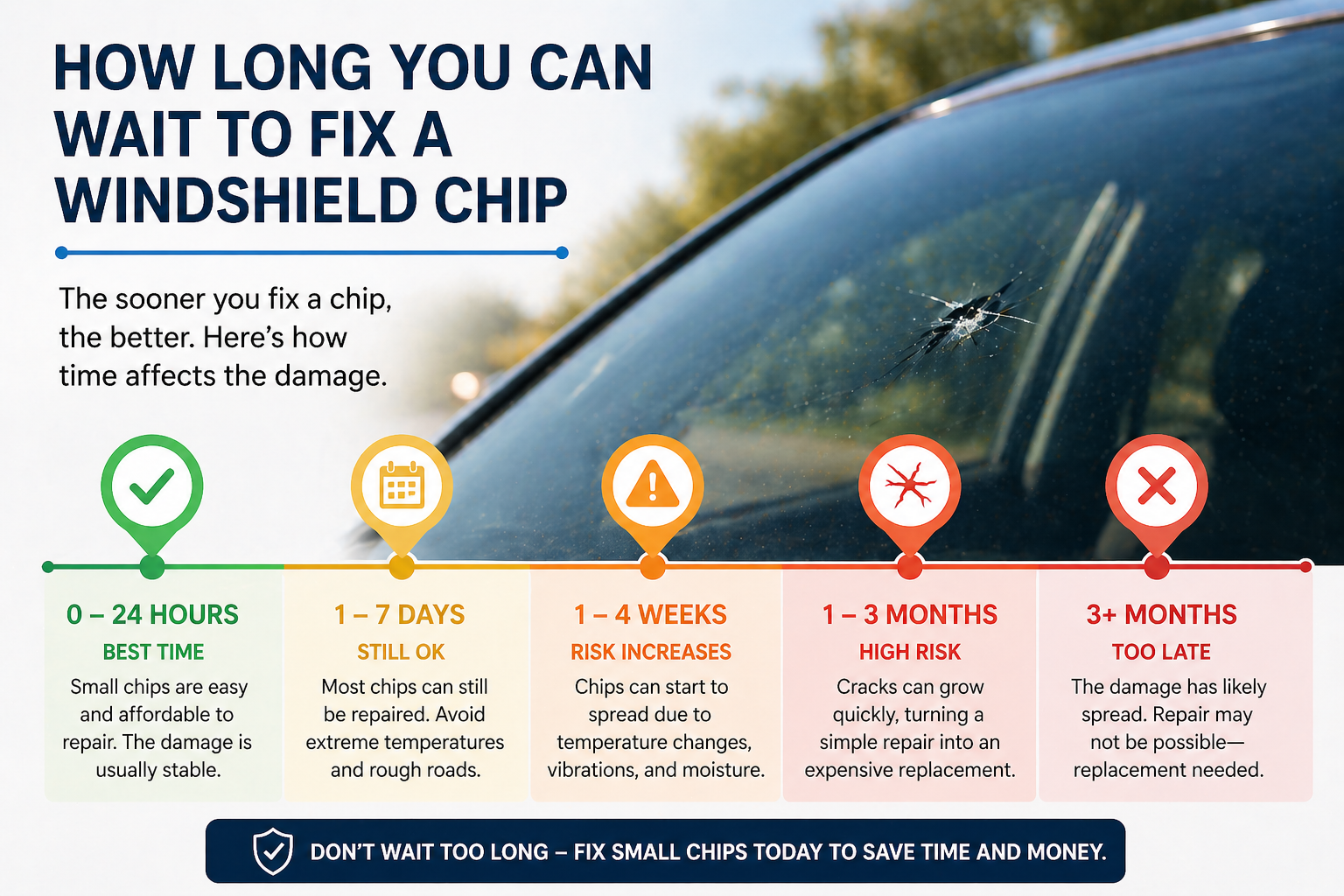
A windshield chip is one of those vehicle problems that feels easy to postpone — it’s small, it’s not causing any obvious trouble, and there are always more pressing things on your to-do list. But understanding how long you can wait to fix a windshield chip before it becomes an unrepairable crack is critical knowledge for any driver — especially in the Dallas–Fort Worth area, where heat and highway conditions accelerate damage faster than most people expect. The practical answer: your repair window is typically 24 to 72 hours, and once it closes, a simple fix becomes a full replacement.
At Jacobs Low Price Auto Glass, we’ve been serving Dallas drivers since 2000. Our technicians have evaluated countless chips that came in just a day or two too late — and it’s a situation that’s almost always avoidable. This guide explains why chips spread, what forces are working against you, and exactly how to tell when you’ve run out of time.
What’s Actually Happening Inside a Windshield Chip
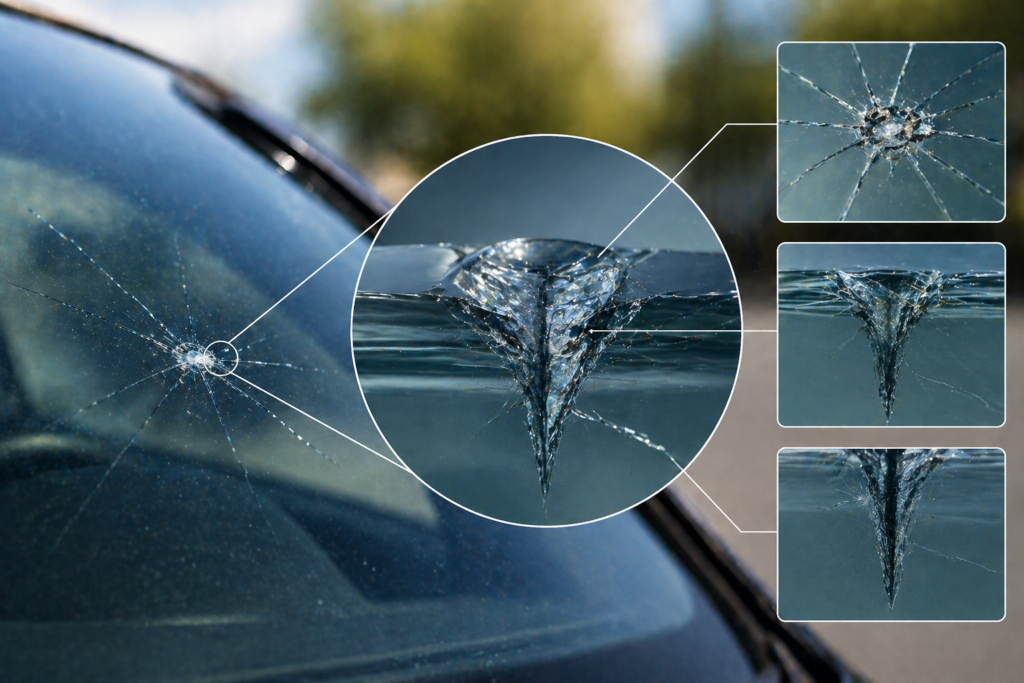
Modern windshields are constructed from two layers of glass bonded together with a plastic safety interlayer — a design known as laminated safety glass. When a rock or piece of road debris strikes the outer layer, it fractures the glass at the point of contact and sends microscopic stress cracks radiating outward. Even a chip that appears small and contained has already begun this process.
Windshield chip repair works by injecting a clear resin into the clean void created by the impact. The resin fills the fracture, bonds to the surrounding glass, and restores structural integrity. But this process depends entirely on the void being clean and dry. The moment moisture, road grime, or airborne debris enters the chip — which can happen within hours of the impact — the resin cannot bond properly. A chip that could have been repaired invisibly on day one may be impossible to repair correctly by day three, not because it has grown, but because it is no longer clean enough for the resin to work.
Why Dallas Chips Spread Faster Than Most
Not all chips behave the same way, and drivers in the Dallas area face conditions that are particularly unforgiving to untreated windshield damage.
Extreme Summer Heat
Glass expands when it gets hot and contracts when it cools. In a city where summer temperatures regularly exceed 100°F, a vehicle parked in direct sunlight can see its windshield surface reach temperatures far above the ambient air. That expansion puts mechanical stress on an already weakened chip, and the temperature swing when the air conditioning kicks on can be enough to drive a stable chip into a spreading crack within a single afternoon.
Highway Driving Conditions
The DFW freeway system — I-35E, I-30, LBJ, the Tollway — subjects windshields to constant vibration at sustained highway speeds. Every expansion joint, rough patch, and lane change transfers mechanical energy through the vehicle’s frame and directly into the windshield. A chip sitting at the intersection of several stress fractures is particularly vulnerable to spreading under these conditions.
Rapid Weather Changes
North Texas is known for weather that shifts dramatically between seasons and sometimes within the same day. A warm afternoon followed by a cold front overnight creates exactly the kind of thermal cycling that accelerates crack propagation. Any moisture that entered the chip during the day can freeze overnight, physically forcing the fracture open as water expands.
A Practical Timeline: When Is It Too Late?
Every chip is different, but here is a realistic framework based on what our team at Jacobs Low Price Auto Glass sees consistently:
- 0–24 hours — Act now for the best result. The chip is at its cleanest and most stable. Resin repair produces excellent results with little to no visible trace of the original damage. This is the cheapest, fastest, and most effective time to address it.
- 24–72 hours — Still repairable, but conditions matter. Contamination risk is increasing with every hour of sun, rain, and road exposure. Repair is still possible in most cases, but results can vary. Tell your technician what the chip has been exposed to since the impact.
- 3–7 days — The line between repair and replacement. Heat cycles, moisture, and highway vibration have likely caused some spreading, and contamination inside the void may prevent proper resin bonding. A professional evaluation is essential — replacement may already be the only option.
- 7+ days — Replacement is likely required. In most Dallas summer conditions, a chip left this long has either spread substantially or become too contaminated for a successful repair. The longer you wait past this point, the higher the probability that a full windshield replacement is your only path forward.
Keep in mind these are guidelines, not absolutes. A chip on a garaged vehicle in mild weather may still be repairable after a week. A chip on a vehicle left outdoors in July heat may be beyond repair within a day. When in doubt, bring it in — a professional evaluation at our Dallas shop is free, and it takes only a few minutes to determine what’s possible.
Signs That Your Chip Has Already Progressed Too Far
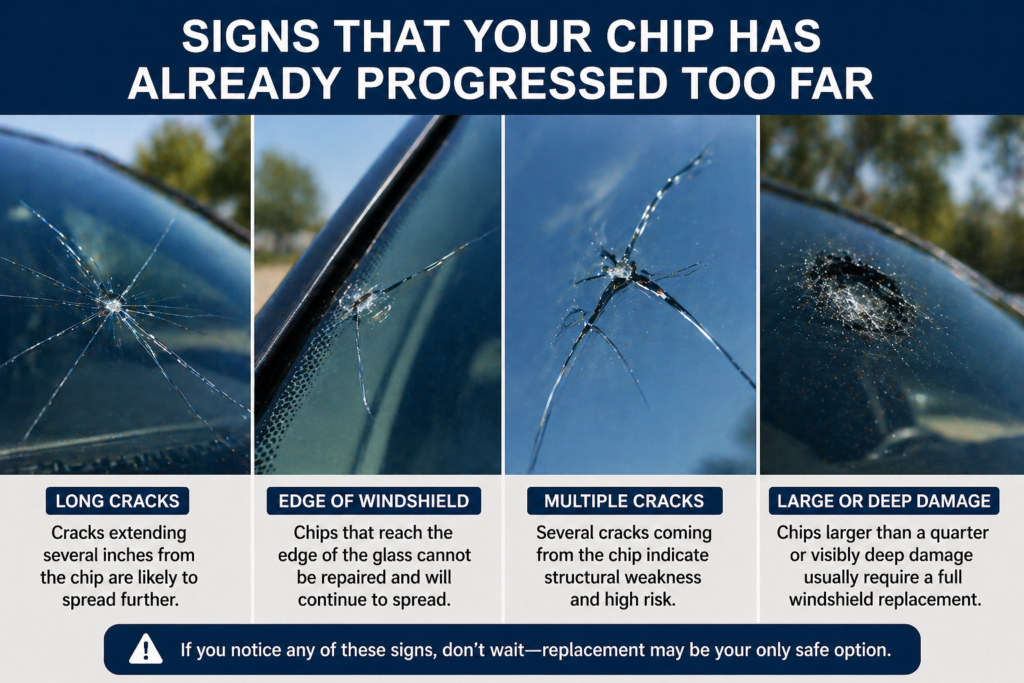
If you’re looking at a chip and wondering whether you’ve already missed the repair window, watch for these indicators that the damage has moved past what resin injection can address:
- A visible crack extending from the original chip, particularly one longer than three inches
- Multiple cracks branching outward in different directions from the impact point
- A dark, cloudy, or hazy appearance inside the chip — a sign that moisture or debris has entered the void
- Any crack that extends to within two inches of the windshield’s edge, where structural stress is highest
- Damage located directly in the driver’s line of sight, where repair standards are stricter for safety reasons
If any of these apply, replacement is likely the right call. The good news: Jacobs Low Price Auto Glass carries one of the largest in-shop auto glass inventories in the DFW area, covering windshields, door glass, quarter glass, back glass, and more. Same-day replacement is available in most cases, and our technicians match your original factory specifications — including any built-in defrost elements, antennas, or rain sensors your windshield came with.
Repair vs. Replace: What the Cost Difference Looks Like
One of the most compelling reasons to act quickly is the cost gap between a chip repair and a full windshield replacement. A chip repair is among the most affordable auto glass services available — typically completed in under an hour with minimal materials. A full windshield replacement, while straightforward in our shop, involves new glass, additional labor, and adhesive cure time.
If you have comprehensive auto insurance, a replacement may be covered — and Jacobs Low Price Auto Glass works with all major carriers to process claims directly. In many cases, our prices come in below a standard comprehensive deductible, making direct payment a practical and often faster alternative to filing a claim. We’ll walk you through both options and let you decide what makes the most sense for your situation.
Frequently Asked Questions About Windshield Chip Wait Times
How fast can a windshield chip turn into a crack?
In Dallas summer conditions, a chip can begin spreading within hours of the initial impact. Heat, direct sunlight, highway vibration, and overnight temperature drops are the main accelerants. Getting the chip evaluated within 24 to 48 hours gives you the strongest chance of keeping the repair option available.
Can a windshield chip still be repaired after it starts cracking?
Short cracks under three inches may still qualify for resin repair, but every inch of spread reduces your options. Cracks over six inches, damage near the windshield’s edge, or contamination inside the void typically mean replacement is the only viable solution.
Is it illegal to drive with a cracked windshield in Texas?
Texas law prohibits driving with an obstructed field of view. Chips or cracks in the driver’s direct line of sight can result in a vehicle equipment violation. Beyond the legal risk, a structurally weakened windshield is a genuine safety concern — in a rollover accident, an intact windshield provides roughly half of the vehicle’s structural support.
What can I do to stop a windshield chip from spreading while I wait?
Cover the chip with clear packing tape to block moisture and debris, park in the shade to reduce heat exposure, avoid high-heat defroster settings, and skip car washes until the chip is repaired. These steps can slow the spread, but they are a short-term stopgap — not a repair.
Does insurance cover windshield chip repair in Texas?
Comprehensive auto insurance covers windshield damage from road debris. Jacobs Low Price Auto Glass works with all major carriers, and our pricing often comes in below a standard deductible — making direct payment a practical alternative to filing a claim.
How long does a windshield chip repair take at Jacobs Low Price Auto Glass?
Chip repairs are typically completed in under an hour. If a full replacement is needed, our large in-shop inventory means same-day service is available in most cases — no special ordering, no second trip.
Act Before the Decision Gets Made for You
A windshield chip gives you a short window to act before it becomes an expensive, unavoidable repair. In the Dallas climate, that window closes faster than in most parts of the country. A chip that costs very little to repair today can easily become a full windshield replacement if left until next week.
Jacobs Low Price Auto Glass has been Dallas’s trusted auto glass resource since 2000. Whether you have a fresh chip or one that’s already started to spread, call us at (214) 372-9300 for a free, no-pressure estimate. We’ll tell you exactly where you stand, give you the most competitive price in the DFW area, and get your vehicle back on the road quickly and safely.